
Written by Katie Jackson-Griffin, LCPC
I am passionate about guiding you to love yourself and build your resilience to take on life’s challenges.
Updated: 09/14/2026
Confidence does not have to come from suddenly feeling fearless or completely changing who you are. Quick confidence-building exercises can help you strengthen self-trust, challenge harsh self-judgment, and recognize the abilities you already have. Small actions repeated consistently can help you feel more capable when anxiety, depression, or major life changes have left you questioning yourself.
Key Takeaways
- Confidence grows through small, repeated actions.
- Physical movement can help shift your mood and energy.
- Mindfulness can help you notice negative self-talk without automatically believing it.
- Setting achievable goals gives you opportunities to build self-trust.
- Self-esteem improves when you recognize your strengths instead of focusing only on shortcomings.
- Therapy can help when low confidence is deeply connected to anxiety, depression, trauma, or difficult life experiences.
Table of Contents
- What are the signs of low self-esteem?
- What are simple physical activities that can boost self-esteem quickly?
- Can mindfulness techniques enhance self-assurance?
- What are the foundational steps to begin building self-esteem?
- What are practical exercises and daily habits that can improve self-esteem?
- What role do personal achievements and goal setting play in boosting confidence?
- When should I consider seeking professional help for low self-esteem and confidence issues?
- Frequently Asked Questions
What are the signs of low self-esteem?
Low self-esteem often shows up as persistent self-doubt, harsh self-criticism, difficulty accepting compliments, or a tendency to focus more on shortcomings than strengths. It can also affect the way you make decisions, communicate, and approach relationships.
You might constantly compare yourself with other people. You may apologize when you have done nothing wrong, struggle to set boundaries, or avoid trying new things because you’re afraid of failing.
Low self-esteem can also look like perfectionism. You may believe that making a mistake means you are not capable, or that you have to perform exceptionally well to deserve approval.
Life changes can make these patterns more noticeable. A career change, relationship shift, becoming a parent, changes in your body, or entering a new stage of adulthood can challenge the version of yourself you have relied on for years.
If you recognize yourself in these patterns, it does not mean something is wrong with you. It may mean that your relationship with yourself needs some attention and care.
What are some simple physical activities that can boost self-esteem quickly?
Simple physical activities can give you a quick opportunity to reconnect with your body and feel more capable. You do not need an intense workout or complicated routine to get started.
Try taking a 10-minute walk, stretching while listening to music, dancing around your living room, or standing outside for a few minutes. The goal is not to change your body or prove your fitness. The goal is to do something active and notice how it feels to follow through.
You can also try a simple posture reset. Put both feet on the floor, relax your shoulders, take a slow breath, and lift your head. Then remind yourself, “I can handle the next thing in front of me.”
That last part matters. Confidence grows when you follow through on the promises you make to yourself. Even a small commitment, like taking a short walk or stretching for five minutes, can reinforce the belief that you can trust yourself.
Can mindfulness techniques enhance self-assurance?
Mindfulness can support self-assurance by helping you notice self-critical thoughts without immediately treating those thoughts as facts. When your mind is telling you that you are not good enough, mindfulness creates a little space between the thought and your response.
Try this quick exercise:
- Notice the thought.
- Name it: “I am having the thought that I am not good enough.”
- Take one slow breath.
- Ask yourself, “Is this a fact, or is this a fear?”
- Replace the judgment with something more balanced.
For example, “I always mess things up” might become, “I made a mistake, and I can decide what to do next.”
This is not about forcing yourself to think positively. It is about developing a more honest and compassionate way of talking to yourself. For additional ideas, you can also explore how positive self-talk can improve your life.
What are the foundational steps to begin building self-esteem?
The foundation of self-esteem is learning to recognize your worth without requiring yourself to be perfect. That can be challenging when anxiety, depression, comparison, or major life changes have made your inner critic especially loud.
Start by noticing the standards you use to judge yourself. Ask whether you would expect a friend to meet those same standards. If you would respond to a friend’s mistake with understanding but immediately criticize yourself for making one, that difference is worth paying attention to.
Next, think about the qualities that have helped you navigate difficult situations. Maybe you are persistent, thoughtful, creative, responsible, curious, funny, loyal, or adaptable. These strengths still matter, even when you do not feel particularly confident.
It can also help to separate your self-worth from your performance. Having a difficult day does not make you a failure. Making a mistake does not erase your strengths. Going through a major life transition does not mean you are falling behind.
If comparison is a major source of self-doubt, moving from self-comparison to self-compassion can be a helpful next step.
What are practical exercises and daily habits that can improve self-esteem?
Daily habits can improve self-esteem when they give you repeated opportunities to notice your strengths and follow through for yourself. The best confidence-building exercises are often simple enough to become part of your routine.
Try keeping a “proof” list. At the end of each day, write down three things you handled, completed, attempted, or faced. They do not have to be impressive. Making a difficult phone call, setting a boundary, getting out of bed on a hard morning, or speaking up during a meeting all count.
Another exercise is to practice one small act of self-trust each day. Choose something you can realistically complete and follow through. The goal is to build the message, “When I say I am going to do something for myself, I can take myself seriously.”
You can also practice receiving compliments without immediately dismissing them. Instead of saying, “It was nothing,” simply say, “Thank you.” Letting positive feedback land can feel surprisingly uncomfortable when you are used to minimizing yourself.
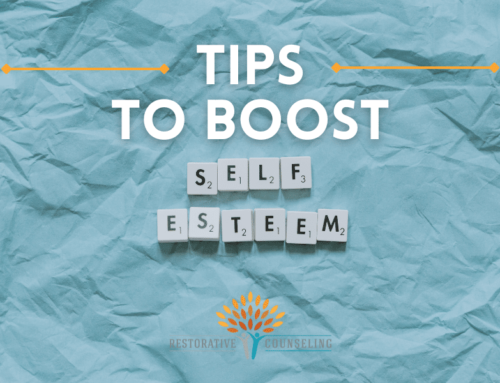
For more practical strategies, see these tips to boost self-esteem.
What role do personal achievements and goal setting play in boosting confidence?
Personal achievements can strengthen confidence because they give you concrete evidence that you can take action and make progress. The achievement does not need to be large to matter.
Start with a goal that is challenging but realistic. If your confidence is low, “completely change my life” is probably too broad to be useful. “Apply for one job,” “take one class,” “make one appointment,” or “spend 15 minutes working on something important to me” gives you a clear place to begin.
Break larger goals into smaller steps. Then acknowledge each step instead of waiting until the entire goal is finished before allowing yourself to feel proud.
It can also help to keep a record of what you have accomplished. When you are feeling discouraged, look back at that list. You may discover that you have already handled more than your current self-doubt is allowing you to remember.
When should I consider seeking professional help for low self-esteem and confidence issues?
You may want to consider professional support when low confidence interferes with your relationships, work, daily life, or ability to make choices for yourself. Therapy can be especially useful when self-doubt is connected to anxiety, depression, trauma, perfectionism, or a difficult life transition.
You do not have to wait until your confidence disappears completely. You can seek help when you notice that negative self-talk is becoming difficult to interrupt or when you repeatedly avoid opportunities because you assume you will fail.
At Restorative Counseling, Katie Jackson-Griffin uses a strength-based approach that focuses on the tools and abilities you already possess. Her work can include concrete strategies and approaches such as Acceptance and Commitment Therapy, Cognitive Behavioral Therapy, and Dialectical Behavior Therapy.
Therapy can provide a place to understand where your self-doubt comes from while also practicing new ways of responding to yourself. The goal is not to become a different person. It is to develop greater self-awareness, emotional strength, and trust in your ability to handle life’s challenges.
Frequently Asked Questions
What are the most effective immediate strategies for boosting confidence?
The most effective quick strategies are usually small actions that help you feel capable in the present moment. Try changing your posture, taking a short walk, completing one manageable task, or replacing a harsh thought with a more balanced one.
What are some quick mental exercises to improve self-perception?
One useful exercise is to identify one self-critical thought and question whether it is actually a fact. Then name one strength or past accomplishment that provides a more complete picture of you.
How can I identify and challenge negative self-talk to improve my self-esteem?
Start by listening for words such as “always,” “never,” “should,” and “not good enough.” Ask whether you would speak to someone you love in the same way, then replace the criticism with language that is honest, specific, and compassionate.
About Restorative Counseling
Restorative Counseling, P.C. is a Chicago counseling practice that helps individuals build resilience, strengthen self-esteem, and navigate life’s challenges with greater clarity and confidence. The practice provides individualized, strength-based counseling that focuses on the skills and strengths each client already has.
Support is available for anxiety, depression, stress, life transitions, relationship concerns, self-esteem, trauma, and other mental health challenges. Restorative Counseling provides virtual counseling through video and phone sessions for clients who prefer flexible access to care.
If you are tired of feeling like you are not good enough, you do not have to figure it out alone. Take the first step toward building confidence, strengthening self-esteem, and trusting yourself more. Schedule a consultation today!